The problem
Phones die in water. Dive computers don’t show your apps.
Nereid puts a sealed dry-air pocket over the phone’s own screen, with a water-immune sensing layer on the outside. One physics stack — many interfaces.
- Capacitive touch fails underwater and through gloves
- Hard cases usually kill the screen as an input surface
- Mission profiles need different trade-offs: weight, depth, precision, hands-free
Family A
Force-sensed rigid housings
- A1 Lightline Mg — lightest full-aperture, 153 g
- A2 Carbonshell — stiffness per gram, RF window
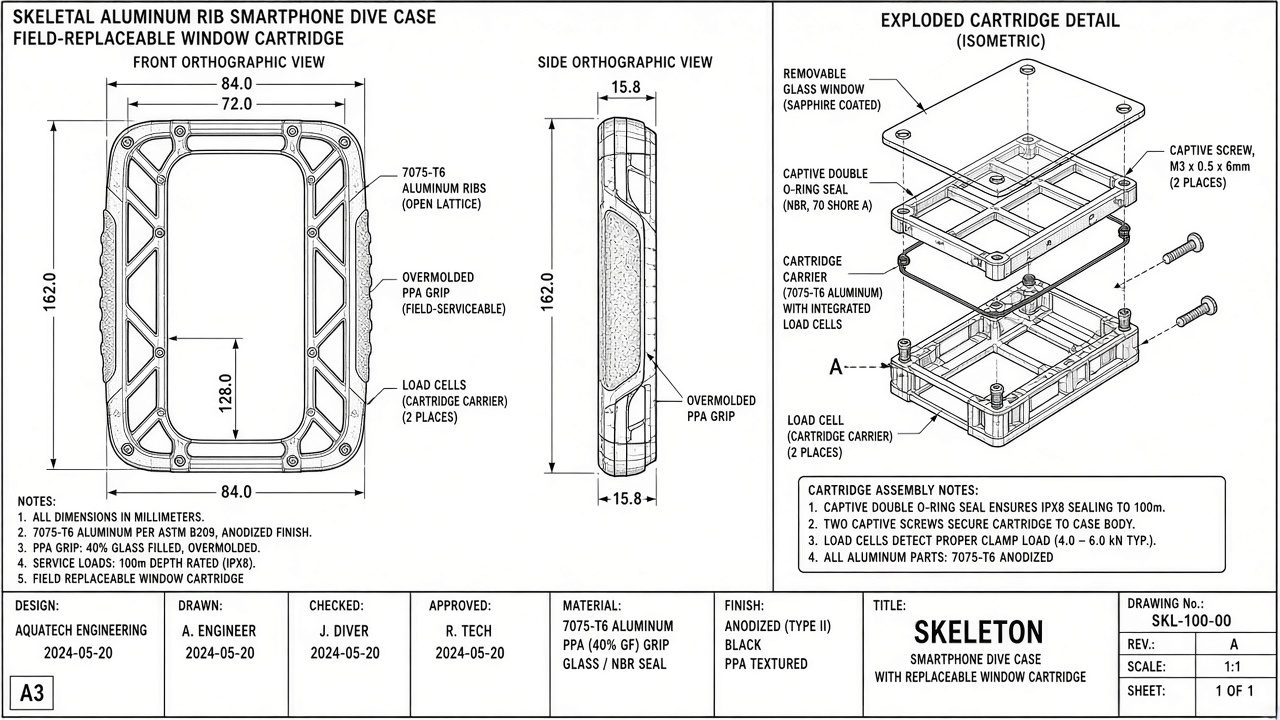
- A3 Skeleton — field-swap window cartridge
- A4 Titan-20 — max abuse, spinel, 205 g
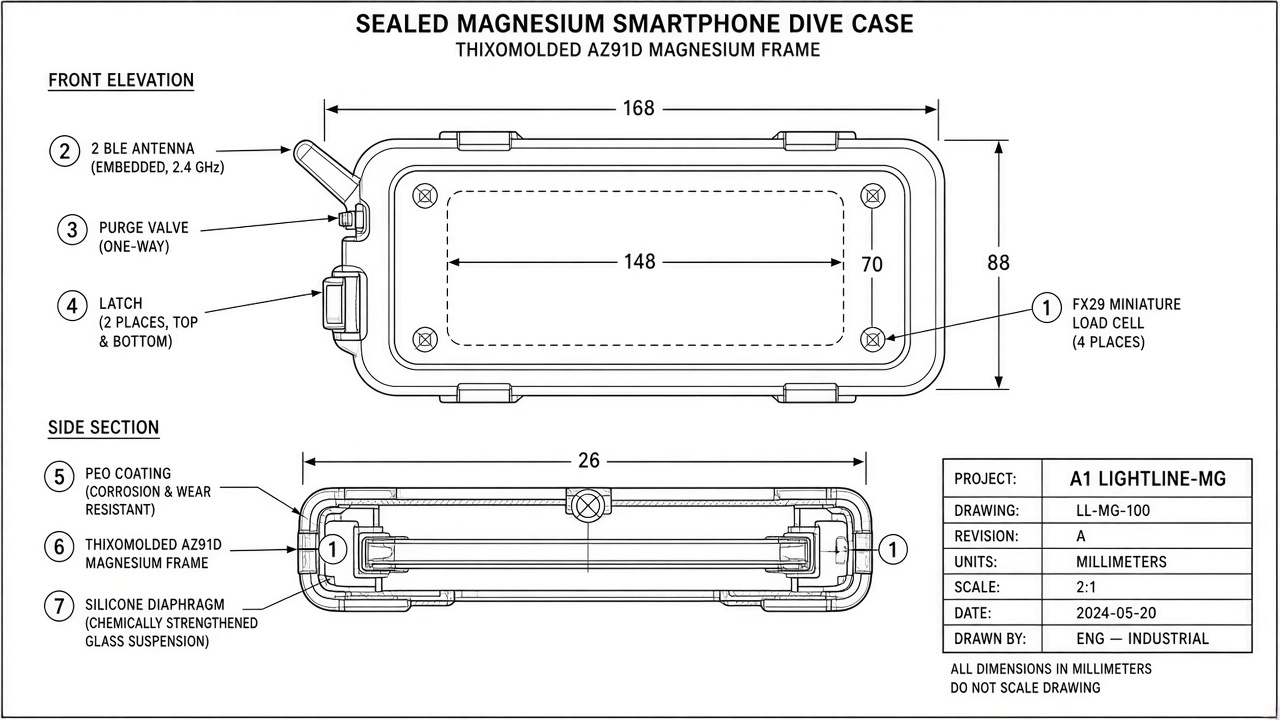
A1153 g · 6 m
A3168 g · 10 m · flagship
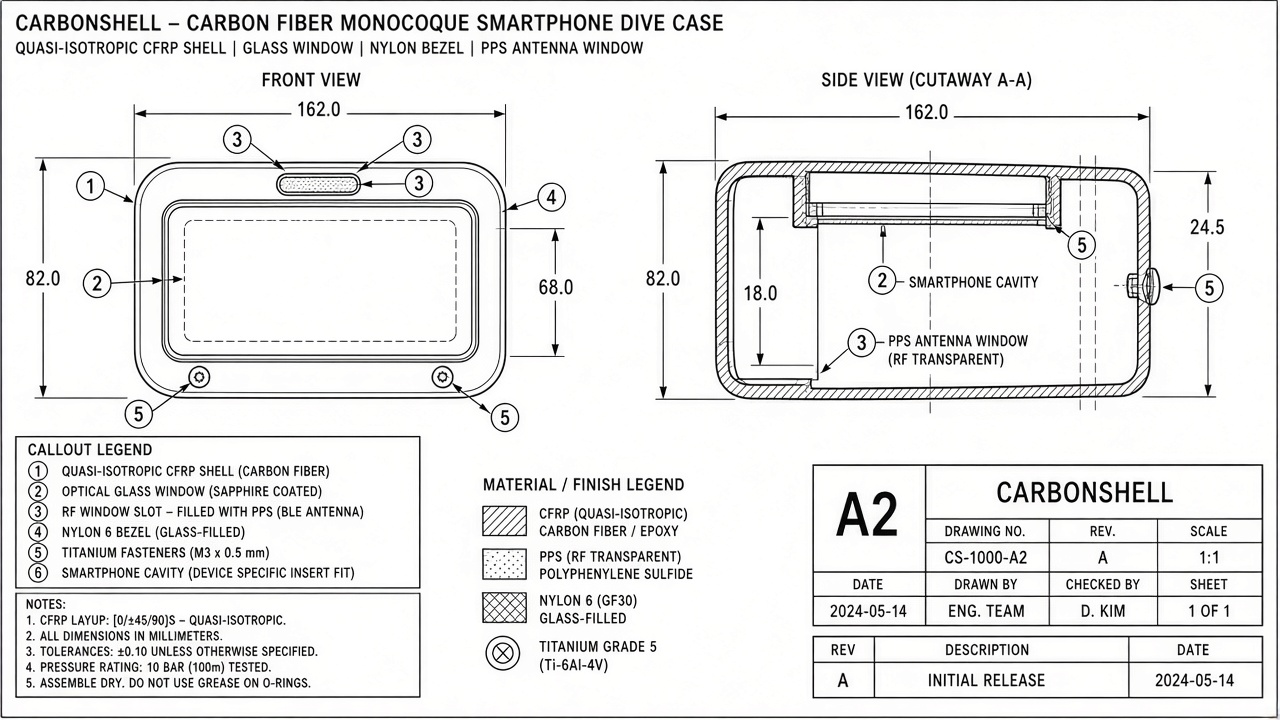
A2147 g · CFRP
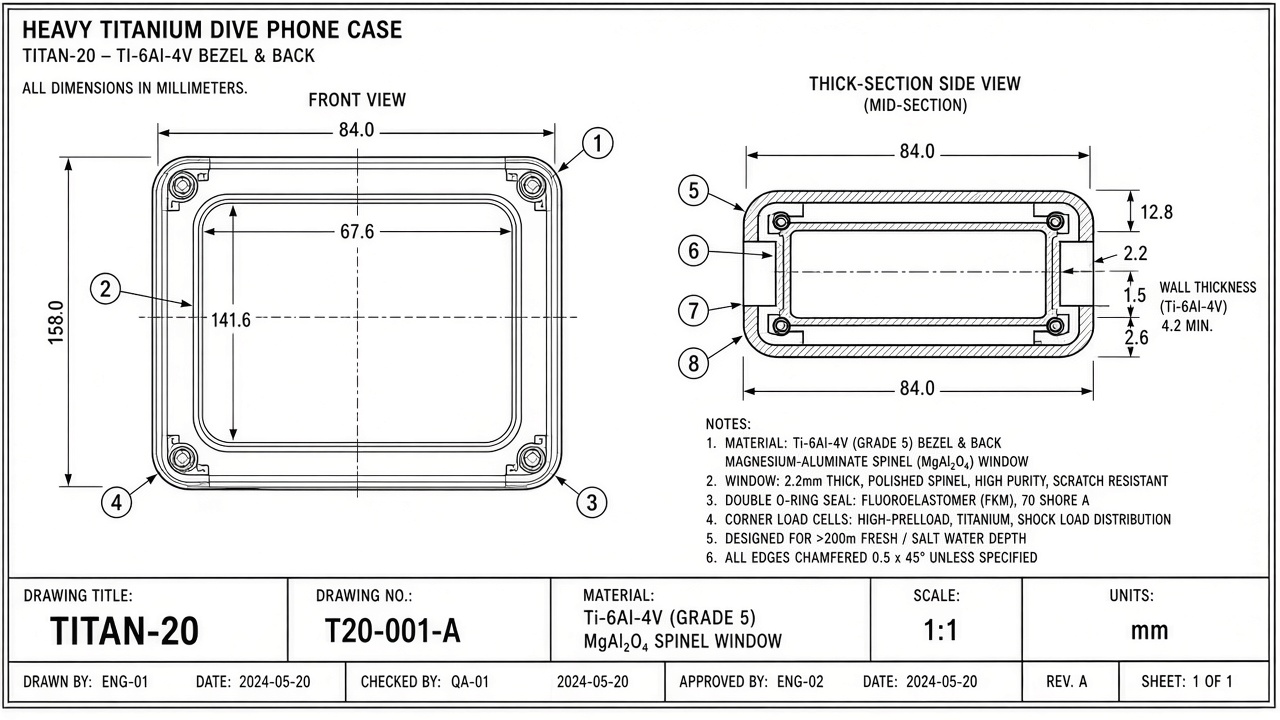
A4205 g · 20 m
Family B
Alternative sensing
Trade resolution or gestures for waterproof magnetics, acoustics, or thirty-year industrial reliability.
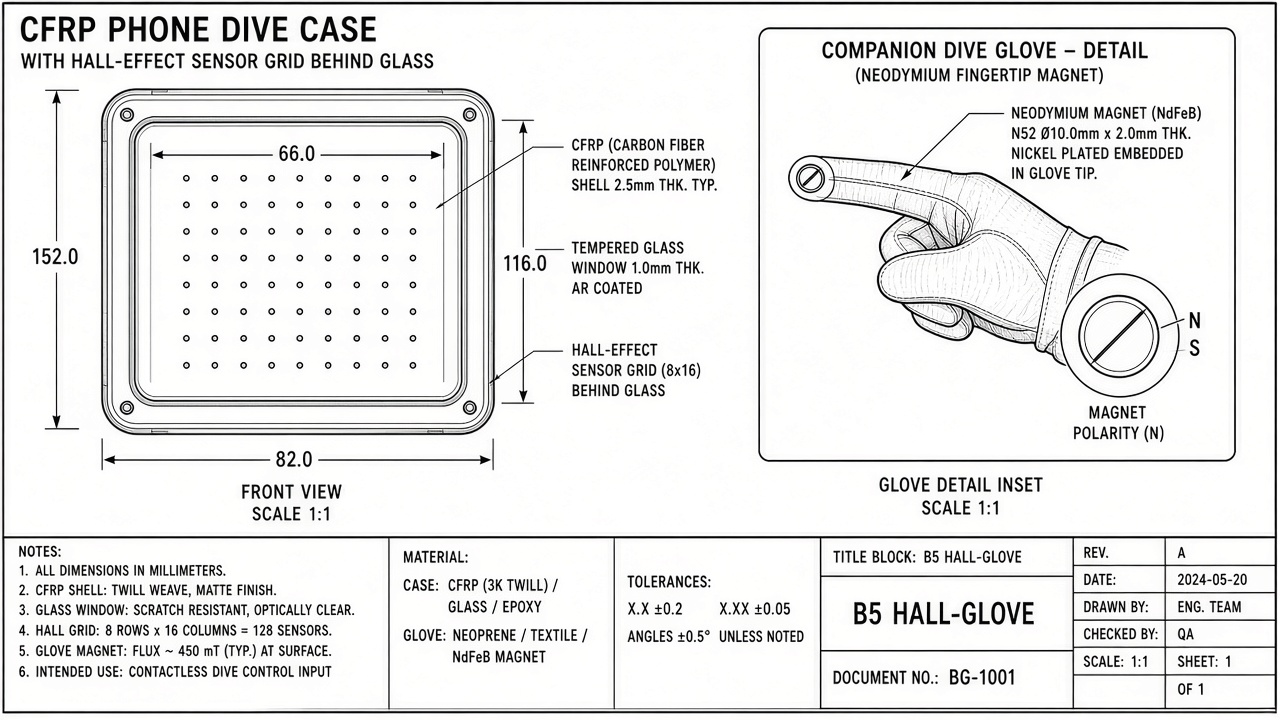
B5 Hall-GloveThick gloves · magnetic
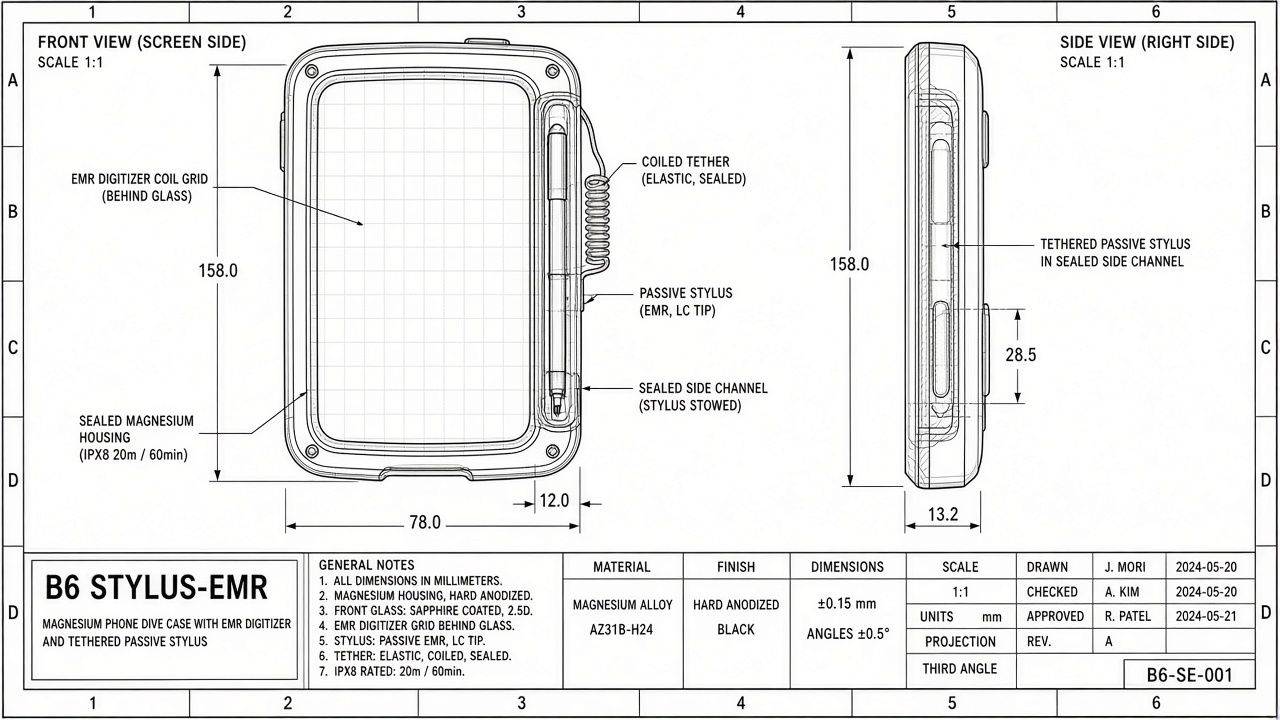
B6 Stylus-EMRSub-mm precision
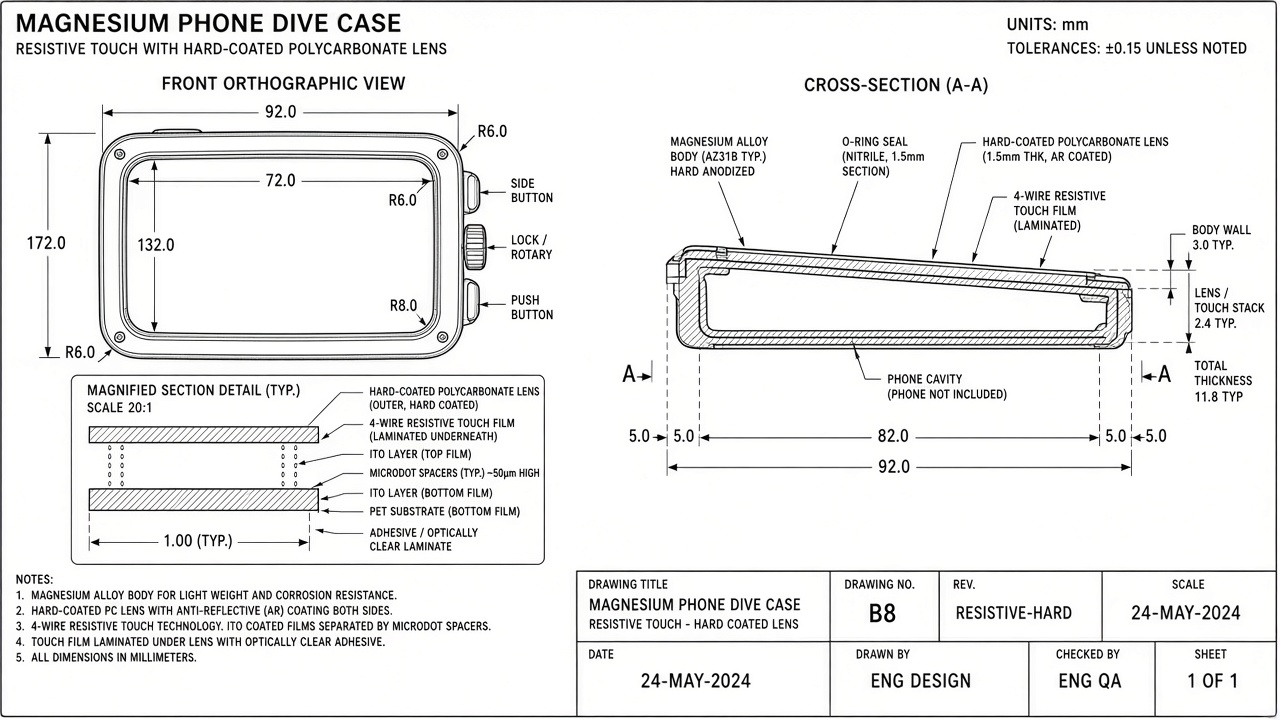
B8 ResistiveShip-first · lowest risk
B7 Lamb-Wave · clearest aperture
B9 Gap-Cap · weeks of standby
Families C & D
When the window stops sensing
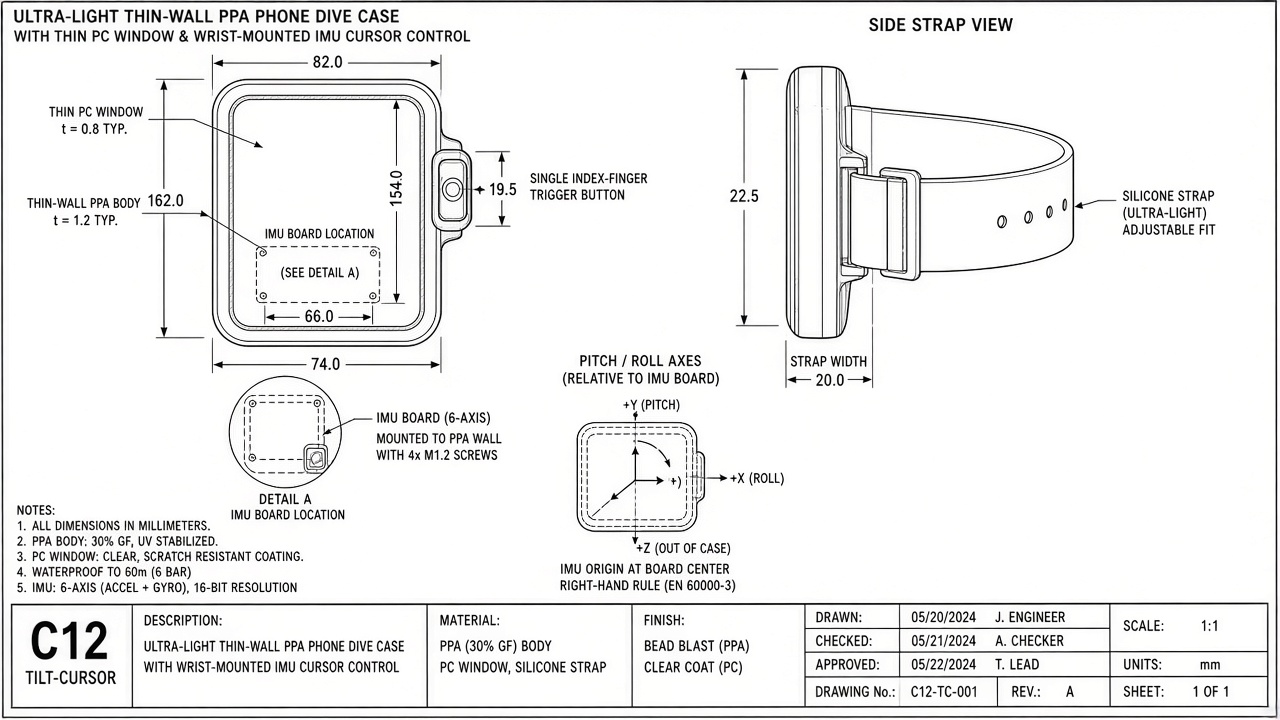
C12 Tilt-Cursor96 g — lightest in catalog
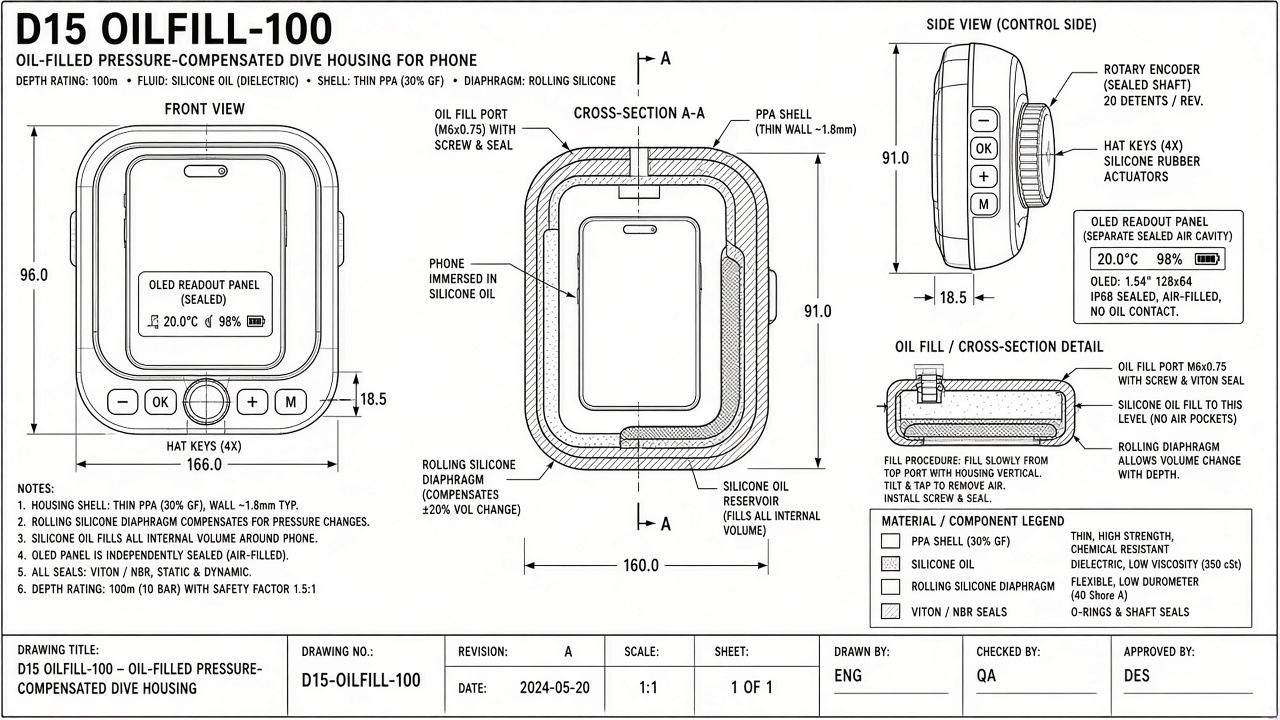
D15 Oilfill-100100 m — real depth
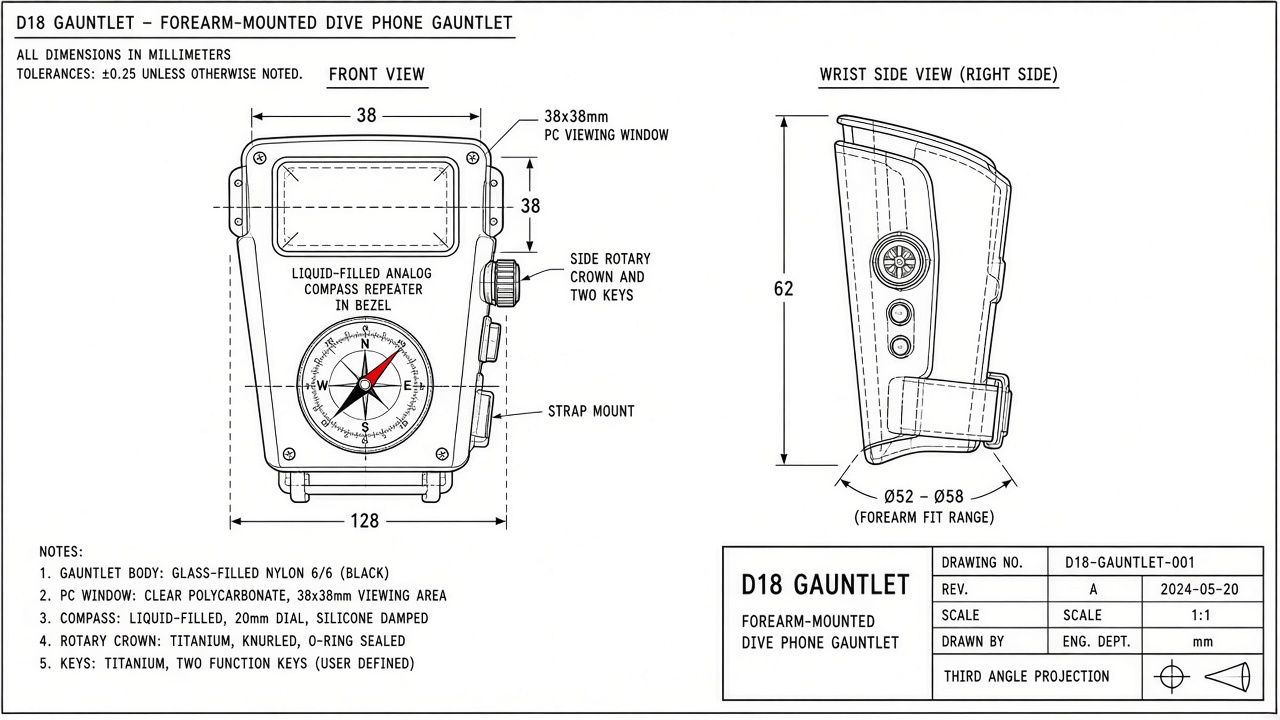
D18 GauntletWrist nav + mechanical compass
C10 Crownpad · fewest failure modes
C11 Tether-Puck · phone stays stowed
C13 Voice-PTT · hands-free
D14 Rolltop · packs flat
D16 Floatline · won’t sink
D17 Chestboard · MOLLE torso